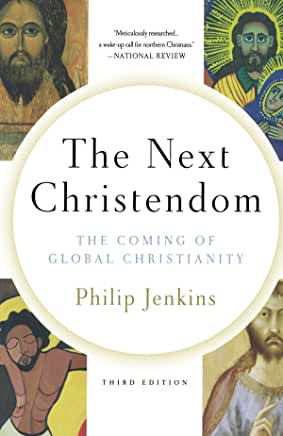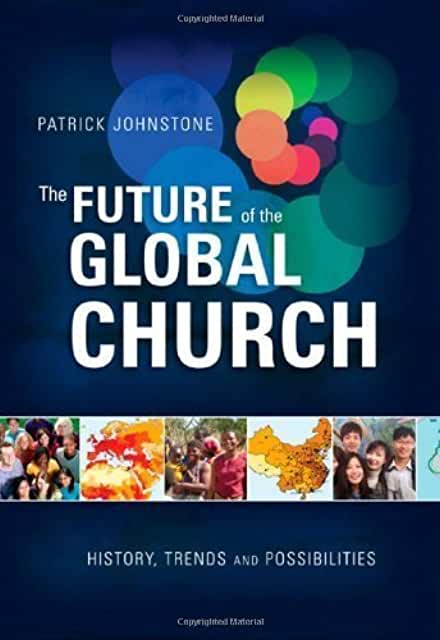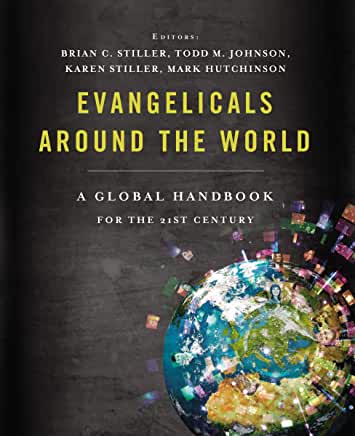
The study of Christianity has traditionally centered around Christianity in its Western context, particularly in Europe and North America. However, as secularization dramatically reshapes Western culture, the centre of Christianity has shifted to regions once considered peripheral to the faith. There are now more Christians in the Majority World than in the West; Christianity truly is a globalized religion. Indeed, the characterization of Christianity as a predominantly European religion only began in the twelfth century AD.
World Christianity is a multidisciplinary field with roots in “the disciplines of missions, ecumenics, and world religions” that draws upon the rich insights of history, theology, anthropology, sociology, communication studies, and other disciplines to explore how the Christian faith became and continues to be a worldwide and connected phenomenon (Irvin, "World Christianity," 2). It seeks to asnwer questions like, how has the prosperity gospel seeped into churches in the Majority World? How has liberation theology impacted social movements within the Western church? How has contemporary Christian music influenced the practice of worship worldwide? How do missionaries from the Majority world evangelize unbelievers in the secularizing West?
World Christianity is interested in both the global and the local, focusing on ways of lifting up marginalized and under-represented voices, whether that be Christian traditions, regions (especially Latin/South America, Africa, and Asia), or women (Irvin, 1-2). As leading historian Dale Irvin declares,
Christianity, long identified in world historical consciousness as primarily a western European religion, is so no longer. Christianity is now predominantly a religion of Africans, Asians, and Latin Americans, and of the descendants of these regions who now live in the North Atlantic world. It is estimated that as many as 60% of the world’s Christians are now living in the southern hemisphere. From a statistical point of view the average Christian is now better represented as living in Sao Paulo, Dar es Salaam or Manila rather than in New York, Geneva or London (Irvin, 10).
Related to this, World Christianity also offers a correction to the propensity to artificially divide church history from World Christianity that leads to “an operative consensus that church history proper, or the history of Christianity, concerns itself with the history of church and theology in the West; while mission history studies the expansion of Christianity primarily in the modern period from the west to the south and east” (Irvin, 17). By looking at World Christianity, students gain a more comprehensive view of how the Christian faith has been lived out, paying equal attention to the centre and the margins.
The following sections in this research guide include preliminary bibliographies of important sources like introductions and books on missions, as well as regional-specific monographs on North America, Central/South/Latin America, Africa, Asia, and Australia/Oceania, ending with helpful journals and websites.